
Leadership hiring is tough. Scratch that – it’s brutally honest, and it forces you to face the uncomfortable: what you don’t know about your own company, your team, and the role itself.
Even when everything looks perfect on paper – shiny CVs, big past wins, confident interview performances – the fallout can be ugly. And it’s not even a surprise anymore: globally, 50–60% of executives fail within the first 18 months after being promoted or hired.
That statistic isn’t just dramatic – it’s deeply instructive. If more than half of leadership hires don’t make it, it means something fundamental is being missed. What follows are the patterns most people overlook, and how you can hire leaders who don’t just fill seats, but move your company forward.
The Usual Suspects: Why Good Leaders Go Wrong
Most leadership misfires happen for the same reasons:
- Charisma over competence: The smile, the confidence, the ability to speak well – it’s seductive. But what matters more is how they think, how they solve real problems, and how they lead people when it matters.
- Overvaluing past titles: Just because someone was CEO of a 30-person startup doesn’t mean they’ll do well as VP in a 3,000-person company. The scale, complexity, and expectations differ a lot.
- Ignoring cultural fit: Even a brilliant strategist will struggle if they don’t understand or respect how your company works – how decisions are made, how people collaborate, or even how feedback is given.
These missteps aren’t rare. They’re nearly universal, because we tend to hire for what we see (titles, achievements, poise) rather than what really predicts success in your specific situation.
Experience Alone Isn’t Enough
A resume isn’t a guarantee. It’s a map of what someone did, but rarely what they can do in new terrain:
- Someone who crushed it in a fast-moving tech startup may get stuck in a regulated, slower-growth context.
- Someone who’s risen fast might have gaps in how they lead teams, manage upward or sideways, or deal with ambiguity.
To uncover those gaps, put candidates in real situations they will face. Ask them to walk through serious trade-offs, conflicting priorities, limited resources. Pair that with conversations with people who saw them struggle, not just succeed. That’s how you see what they actually do, not just what they claim.
Culture and Context Are Everything
Thinking culture is “nice to have”? Think again. Culture is the soil where leadership either grows or withers.
- Don’t try to replicate existing leadership traits mindlessly. Copying leaders often fails because what worked for them may be irrelevant for the challenges you face now.
- Use realistic scenario-based discussions. What do they do when there’s friction? When resources are tight? When expectations are vague? Those moments reveal true alignment with how you – as an organization – operate.
- Evaluate success not just by goals achieved, but also by how they behave along the way: transparency, humility, how they handle feedback, how they structure their own team’s success.
“The function of leadership is to produce more leaders, not more followers.” – Ralph Nader
Signals That Actually Matter
Since titles and CVs won’t tell the whole story, here’s what does:
- Behavioral consistency: Can this person repeatedly show good judgment, integrity, and adaptability? One brilliant moment doesn’t cut it.
- Learning agility and self-awareness: Leaders who can adjust, admit mistakes, evolve -those are the ones who can survive disruptions and shifts.
How Leadership Hiring Can Actually Work
Hiring a senior leader is not a checkbox exercise. It’s about choosing someone who can carry not just responsibility, but ownership – someone who can effect real change in your company’s specific environment.
Focus on three critical things:
- Needs clarity: What exactly are the challenges this leader will face? What have you not solved yet? What does success look like in a year’s time – and how will you measure it?
- True assessment: Use realistic simulations, get past the CV, dig into how they respond to pressure, ambiguity, conflict. Cross-check with people who know them well – not just those who sing praises.
- Support for impact: Onboarding, access to resources, clear alignment with other leaders, early wins, feedback loops – all of this matters. Even a brilliant leader falters without structure and realistic expectations.
If this strikes a chord, write to us at Startup.Hiring@Careerxperts.com. Let’s figure out together how your leadership hiring can stop being a gamble and become a strategic move.
“The cost of a bad hire is far greater than the cost of a vacant seat.” – Mark Murphy
The Depth of a Leader
Leadership isn’t about a title or a corner office. It’s about depth – the depth to understand where the organization stands today, the maturity to shape where it goes tomorrow, and the humility to bring people along on that journey.
When companies get leadership hiring right, they don’t just hire someone to “run things.” They hire someone who can align execution with vision, who can balance ambition with discipline, and who can inspire confidence across teams, boards, and markets alike.
That’s the standard worth aiming for. Leadership is the lever that multiplies organizational strength. When you choose wisely, the impact goes beyond a single role – it defines the trajectory of the entire company.
Hiring? We’ve Got You Covered!
Precision Recruitment : Recruitment Solutions | RPO
Curated Jobs : No spam, just high-value roles.
CareerTalks WhatsApp Community : For career enthusiasts & founders
Success Stories : Real experiences from clients and talent.
Get a personalized career roadmap : start here.
For your specialized path to career growth. : Career Enablement Program.
Related Blogs

How Do You Know If You Are Underpaid?
by CareerXperts Teamon 16 August, 2023“Your salary is not just a number; it’s a reflection of the value you bring to the world...
The Art of Startup Hiring
by Priyanka CAon 18 June, 2026The hardest part of building a company is not finding talent. It is learning how much one wrong hire...
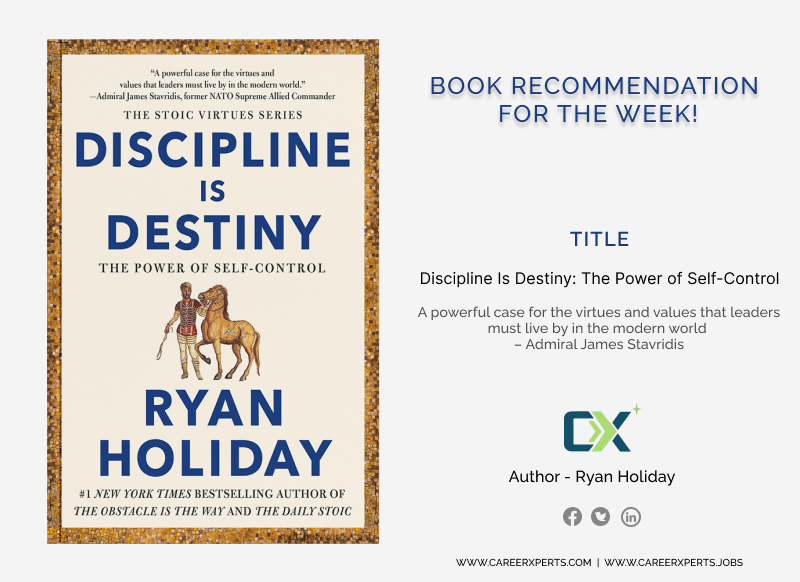
Non-Fiction: Discipline Is Destiny – The Power of Self-Control
by Prithvi N Shahdeoon 4 January, 2023Non-Fiction – Discipline Is Destiny: The Power of Self-Control Title: Discipline Is Destiny: ...
Leave a Reply