
Why every enterprise is now competing on founder-speed – and what to do about it
There’s a lie the market has been telling itself for a decade: that “startup mindset” is a stage, not a state – something a company graduates out of once it crosses a certain headcount, revenue line, or IPO bell. The truth is the opposite. Startup mindset was never a small-company idea borrowed for a season. It is a big-company idea too, and arguably a bigger one, because the bigger an organization gets, the more it needs the instincts that built it.
That lie about outgrowing it is now the single biggest liability on a big company’s balance sheet.
Here’s the shift playing out in real time, across founders being advised and enterprise leaders being coached everywhere: the companies winning right now – regardless of size – are the ones that never let the org chart replace the founder’s instinct. The companies losing are the ones mistaking scale for maturity, when what they’ve actually built is inertia.
This isn’t a metaphor. It’s a mandate.
The Myth of “Too Big to Move Fast”
Every excuse a 5,000-person company gives for why it can’t move – legal review, stakeholder alignment, “that’s not how we do things here” – is a bureaucracy problem wearing a risk-management costume. Zero-to-one founders don’t have the luxury of that costume. They ship, they learn, they iterate, because the alternative is dying. That existential pressure is a feature, not a bug – and it’s the exact feature most enterprises have engineered out of their culture in the name of stability.
But stability without speed isn’t stability. It’s a slow bleed with better branding.
A million-dollar company CEO said as much recently, describing it as a personal objective to keep the company acting like a startup even as its revenue and headcount climb into the billions – “a big startup, and an even bigger startup,” in the CEO’s words. Asked what it actually takes to hold onto that identity at scale, the CEO pointed to a culture where “there has to be a culture of ownership among employees,” paired with agility and problem-solving instincts, and reward systems designed the way a startup would design them – where risk-taking is deliberately built into how people are recognized and paid, not left to chance.
That’s the pattern worth studying. Not a single unicorn moment, but what a founder-led company keeps choosing to protect after it’s already won.
What “Startup Mindset” Actually Means
Time to kill the caricature. Startup mindset isn’t beanbags, unlimited PTO, or a Slack channel full of reactions. It’s an operating system with four non-negotiable components.
Ownership over territory. In a startup, nobody says “that’s not my job” – if it’s broken and nobody fixes it, the company dies. In big companies, that instinct gets trained out of people through rigid role definitions. The fix isn’t flattening the org chart overnight. It’s rewarding the person who steps outside their lane to solve the actual problem, publicly and often.
Speed as a value, not a KPI. Startups don’t track decision speed on a dashboard – they live it, because survival demands it. Big companies need to reintroduce artificial scarcity on purpose: shorter deadlines, smaller decision-making pods, a bias toward a fast answer that can be corrected over a slow one that arrives too late to matter.
Talent density over headcount. Startups win not because they hire more people, but because they hire fewer, better people who each carry disproportionate weight. Big companies default to headcount as a proxy for capability. That’s the wrong instinct. The Z Factor – that rare, self-propelling execution capability – doesn’t scale with org size. It scales with how ruthlessly a company protects signal over noise in who gets to build.
Mission as infrastructure. Startups survive because everyone can explain why the company exists, in one sentence, unprompted. Ask that question inside most enterprises and the answer is a values poster, not a conviction. Mission isn’t a marketing asset. It’s the fastest alignment tool ever invented – faster than any process document written this quarter.
The Enterprise Advantage Nobody’s Using
Here’s the part big companies keep missing: they don’t need to become a startup. They need to become a bigger startup – a fundamentally different, and frankly more powerful, position. A real startup is resource-constrained by definition. A big company running on startup instincts has capital, distribution, and talent gravity a Series A founder would trade almost anything for, combined with the speed that got it there in the first place, if that speed hasn’t been allowed to atrophy.
That combination – founder-speed plus enterprise-scale resource – is close to unbeatable. It’s also rare, because most leadership teams optimize for the wrong thing the moment they hit stability: protecting what’s been built, instead of continuing to build.
The Actionable Part
For anyone leading inside a large organization, here’s where to start this week, not next quarter.
Audit decision latency. Pick the last five major decisions made. Time-stamp when the problem was identified versus when action was taken. If that gap runs into months, the issue isn’t strategy – it’s speed.
Create one zero-bureaucracy pod. Take the five best people available, hand them a real problem, remove every approval layer, and give them 30 days. Watch what startup speed actually produces inside the walls. Then ask why the other 4,995 people don’t operate this way.
Hire for the Z Factor, not just credentials. A resume shows where someone has been. It doesn’t show whether someone can build something from nothing under pressure. Build that signal directly into the interview process – ask candidates to describe the last thing they built with no roadmap and no permission.
Repeat the mission until it’s boring. If nobody’s tired of saying it yet, the team hasn’t internalized it.
The Bottom Line
Startups don’t have a monopoly on the startup mindset – they simply have no choice but to practice it. Big companies have a choice, and most are choosing comfort. The ones choosing otherwise – treating scale as leverage for founder-speed rather than an excuse to slow down – are the ones who will define the next decade of market-dominant companies.
The startup mindset isn’t a phase a company outgrows. It’s the operating system a company either protects on purpose, or loses by default.
Here’s a snapshot of what we’re all about:
- Hiring for AI or moving into AI roles? Write to AI.Hiring@Careerxperts.com
- Hiring? We’re here to Help!
- CareerXperts Workforce Solutions: CX Workforce
- Candidate Jobs Portal: High impact job opportunities
- Customer Stories: Hear from our clients and candidates
- Stay in the Loop: Top startup opportunities, straight to your WhatsApp. Join the channel.
- Fill out this form if you are looking to get your Career Health Diagnosed
Related Blogs
WORKFORCE READINESS: THE DEFINING COMPETITIVE ADVANTAGE OF THE NEXT DECADE
by Sanjana R Pujaron 25 June, 2026Why Capital, Technology and Infrastructure Are No Longer Enough For decades, economic growth was sha...
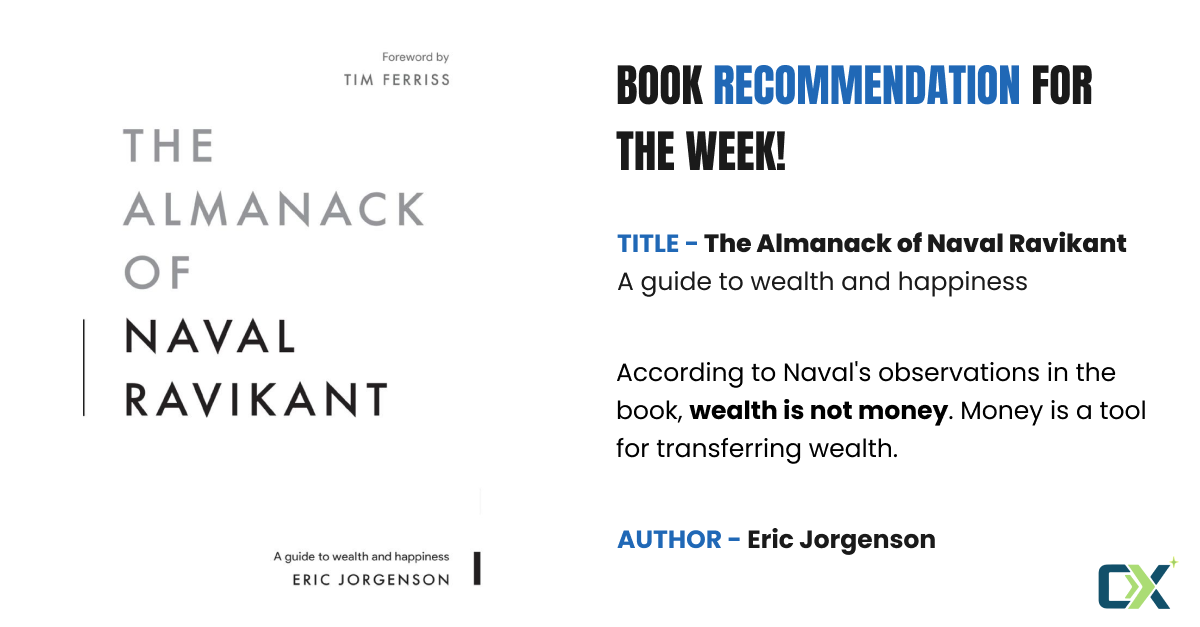
Non Fiction: The Almanack of Naval Ravikant
by Prithvi N Shahdeoon 22 December, 2021Title: The Almanack of Naval Ravikant | A guide to wealth and happiness Author: Eric Jorgenson ...
The Art of Startup Hiring
by Priyanka CAon 18 June, 2026The hardest part of building a company is not finding talent. It is learning how much one wrong hire...
Leave a Reply