
The founders building exceptional companies are not doing less. They are taking on more responsibility than ever before.
There is a moment in almost every startup journey when reality arrives faster than expected.
The product starts gaining traction.
Customers begin responding.
The team grows.
Investors become interested.
And suddenly, the founder discovers that building a company has very little to do with the original idea.
The real challenge is building an organization capable of delivering that idea repeatedly.
Founders often begin by thinking their biggest challenge will be product development, fundraising, or customer acquisition.
What catches many by surprise is something else entirely.
Leadership.
More specifically, the responsibility of creating clarity for people when the future itself remains uncertain.
The startup playbook that guided previous generations is changing rapidly. Yet the weight carried by founders is becoming heavier, not lighter.
The Founder Has Become the First Competitive Advantage
For years, startup advice centered around products.
Build something unique.
Protect it.
Scale it.
Defend it.
Today, the reality feels different.
Technology is becoming increasingly accessible. AI-powered products can be launched faster than ever before. Features that once took years to develop can now be replicated within weeks.
As barriers fall, something unexpected becomes more valuable.
The founder.
Their judgment.
Their network.
Their industry understanding.
Their ability to recognize opportunities that others overlook.
Most importantly, their ability to attract exceptional people before success is guaranteed.
The strongest founders are not merely building products.
They are building conviction.
And talented people tend to follow conviction long before they follow certainty.
Hiring Has Become a Test of Leadership
Many early-stage founders believe hiring begins when the company reaches a certain size.
In reality, hiring begins much earlier.
It starts the moment someone considers joining your vision.
People are not evaluating compensation alone.
They are evaluating clarity.
Can this founder explain where the company is going?
Can they explain why it matters?
Can they explain why this problem deserves years of someone’s professional life?
The uncomfortable truth is that most hiring challenges are not hiring challenges at all.
They are leadership challenges.
When founders struggle to attract exceptional talent, the issue is often not a shortage of candidates.
It is a shortage of clarity.
People commit to leaders who make uncertainty feel understandable.
That responsibility cannot be delegated.
Narrow Focus Creates Stronger Companies
One of the biggest shifts happening today is the growing value of specialization.
For years, startups were encouraged to think bigger.
Build platforms.
Own categories.
Expand quickly.
Yet many successful founders are moving in the opposite direction.
They are going deeper instead of wider.
They are becoming indispensable within specific industries, workflows, and customer problems.
This creates a powerful hiring lesson.
People perform better when they understand exactly what problem they are solving.
Focused companies attract focused talent.
Focused talent creates stronger execution.
And strong execution compounds.
The startups making the greatest progress are often not chasing every opportunity.
They are becoming exceptionally valuable to a very specific audience.
Revenue Is Becoming the New Validation
There was a period when fundraising became a milestone that many founders celebrated as an achievement in itself.
The environment looks different today.
Customers matter more.
Revenue matters more.
Sustainable growth matters more.
This shift creates another important change in hiring.
Every hire must matter.
Every role must have purpose.
Every addition to the team must create measurable value.
The era of building large teams simply because capital is available is fading.
Founders are asking harder questions.
Do we need another employee?
Do we need a different process?
Can this work be automated?
Can this responsibility be redesigned?
These questions are not signs of hesitation.
They are signs of discipline.
And disciplined hiring often produces stronger companies.
The Rise of Smaller, Stronger Teams
Many startup leaders are discovering something that feels counterintuitive.
More people do not automatically create more progress.
In fact, additional complexity often creates additional friction.
Communication expands.
Decision-making slows.
Alignment becomes harder.
Exceptional startups are increasingly being built by remarkably small teams.
Not because founders are avoiding investment in people.
Because they are becoming more deliberate about where human expertise creates the greatest value.
The best founders understand that talent is not measured by headcount.
It is measured by impact.
As management thinker Peter Drucker once observed:
“There is nothing so useless as doing efficiently that which should not be done at all.”
That observation feels especially relevant today.
The smartest hiring decisions often begin by questioning whether a role should exist before deciding who should fill it.
Customer Relationships Are Becoming the Real Asset
Technology changes.
Markets evolve.
Products improve.
What remains surprisingly durable are trusted customer relationships.
Founders who spend their time deeply understanding customers often build advantages that competitors struggle to replicate.
The same principle applies internally.
Employees are increasingly drawn toward organizations where leaders remain connected to reality.
Where decisions are grounded in customer understanding rather than assumptions.
Where leadership stays close to the problem.
The strongest cultures are rarely created through policies.
They are created through consistent founder behavior.
People watch what leaders prioritize.
They pay attention to where attention goes.
That becomes culture.
The Responsibility Is Growing, Not Shrinking
There is a misconception that modern startup building is becoming easier.
The tools are certainly improving.
Technology is becoming more accessible.
Resources are more abundant.
Yet the founder’s responsibility continues to expand.
Today, founders are expected to understand customers, attract talent, create culture, drive revenue, manage efficiency, communicate vision, and make decisions under constant uncertainty.
That is a significant burden.
But it is also what separates companies that survive from companies that endure.
The startup playbook is changing.
The strongest founders are adapting.
Not by doing less.
By becoming exceptionally clear about what deserves their attention, who deserves a seat on the journey, and how every decision contributes to building a company worth following.
Because in the end, exceptional startups are not built by the founders who scale the fastest.
They are built by the founders who create clarity when everyone else is still searching for direction.
Here’s a snapshot of what we’re all about:
- Hiring for AI or moving into AI roles? Write to AI.Hiring@Careerxperts.com
- Hiring? We’re here to Help!
- CareerXperts Workforce Solutions: CX Workforce
- Candidate Jobs Portal: High impact job opportunities
- Customer Stories: Hear from our clients and candidates
- Stay in the Loop: Top startup opportunities, straight to your WhatsApp. Join the channel.
- Fill out this form if you are looking to get your Career Health Diagnosed
Related Blogs
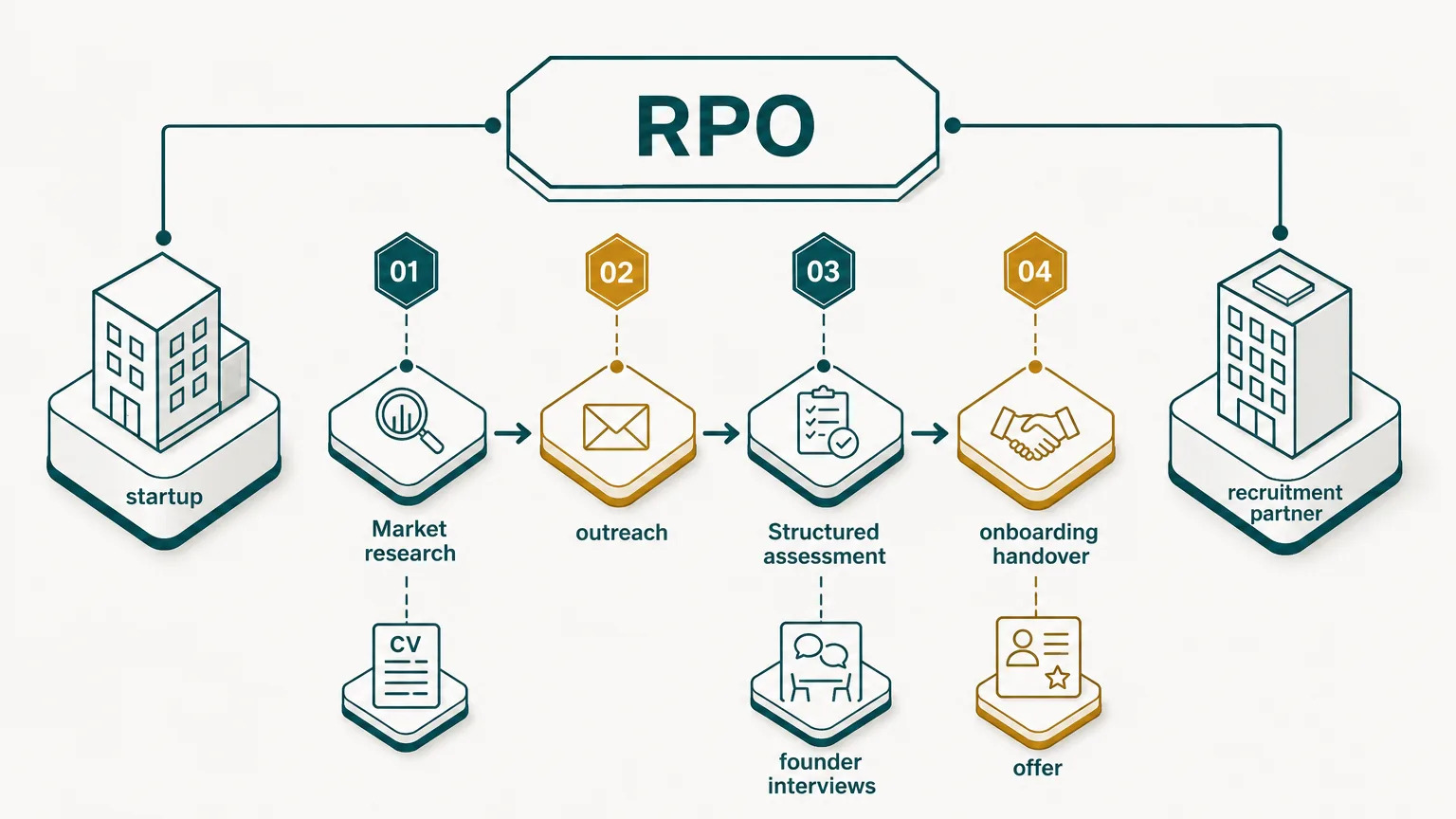
A founder’s operating brief for an RPO-led founding team search
by CareerXperts Teamon 23 September, 2026An urgent founding-team hire can feel like a simple recruitment problem: define the role, publish it...
Why Early Startup Experience Changes Careers Faster Than Most People Realize
by Priyanka CAon 18 June, 2026There is a certain kind of pressure that changes people. Not the pressure of exams, quarterly apprai...

Is Your Career Ready for the Challenge in Uncertain Times?
by CareerXperts Teamon 25 July, 2024“A Successful Career Path looks less like a Superhighway and more like a Poorly Marked Hiking ...
Leave a Reply