Deep Career Conversations on why stability now belongs to people who build beyond a single job title.
There was a time when careers felt predictable.
Study hard. Get the degree. Find a stable company. Stay loyal. Wait patiently. Climb carefully. Repeat the cycle for thirty years and eventually arrive at security.
For a long time, that structure gave people emotional comfort. Even if progress felt slow, at least the path looked visible.
That certainty is fading now.
And many people feel it long before they say it out loud.
At Deep Career Conversations, one reality keeps surfacing repeatedly across industries, experience levels, and leadership conversations: people are no longer anxious only about losing jobs. They are anxious about becoming replaceable inside systems changing faster than their skills.
That is a much deeper fear.
Because it forces people to question whether the structure they trusted still protects them the way it once did.
The uncomfortable part is this: many professionals are still approaching modern careers with old assumptions. They are trying to climb ladders inside industries that are restructuring underneath them.
Meanwhile, the people adapting fastest are building something very different.
Not a ladder.
A system.
The Single-Income Identity Is Becoming Fragile
For years, professional identity became tightly attached to employment.
People introduced themselves through company names and designations before anything else. A job title became social proof, financial structure, emotional stability, and long-term planning all at once.
That worked when industries changed slowly.
It becomes dangerous when industries transform aggressively.
Today, companies optimize for efficiency constantly. Teams are becoming leaner. Automation is replacing repetitive execution work. AI systems are changing how organizations think about productivity, support functions, analysis, operations, and communication itself.
This is not limited to one industry anymore.
Technology. Media. Finance. Operations. Consulting. Creative work. Research.
Everything is shifting simultaneously.
And yet many professionals still depend entirely on one employer, one income structure, and one narrow definition of expertise.
That dependency creates emotional pressure people carry every day without realizing it fully.
Because when one system controls your income, your identity, your future planning, and your confidence at the same time, uncertainty starts feeling personal.
At Deep Career Conversations, this is becoming one of the defining emotional patterns of modern work.
People are exhausted not only because work is difficult.
They are exhausted because they sense the old structure weakening beneath them.
The Strongest Careers Now Look Different
The most adaptable professionals are no longer thinking only about promotions.
They are thinking about leverage.
That shift changes everything.
Some are building advisory skills alongside full-time roles. Others are creating niche expertise strong enough to attract consulting opportunities independently. Some are building newsletters, communities, digital products, research visibility, or specialized personal brands around their knowledge.
Not because everyone wants to become an entrepreneur.
Because people want optionality.
That word matters deeply.
Optionality creates emotional stability in unstable environments.
A person with multiple valuable skills approaches uncertainty differently from someone dependent on a single system. A professional with visible expertise, industry relationships, and independent credibility carries less fear into career decisions.
Not because risk disappears.
Because dependence reduces.
This is where many professionals misunderstand modern career resilience.
Resilience is no longer built only through loyalty.
It is built through adaptability, visibility, transferable value, and the ability to create opportunities outside traditional structures.
That realization changes how people learn, communicate, and position themselves professionally.
Knowledge Is Becoming a Long-Term Asset
One of the most important ideas emerging inside Deep Career Conversations is this: learning has stopped being about credentials alone.
The strongest professionals are treating knowledge like an asset that compounds over time.
That distinction matters.
Because credentials often expire emotionally faster than people expect. Skills become outdated. Industries evolve. Tools change. Entire functions transform.
But people who learn continuously begin noticing patterns others miss.
They connect ideas across disciplines. They solve problems differently. They ask better questions.
And over time, they become difficult to replace.
“No person is free who is not master of himself.”
That quote feels especially relevant now.
Modern career stability increasingly belongs to people capable of directing their own growth instead of waiting for systems to define it for them.
The engineer learning communication. The marketer understanding behavioral psychology. The recruiter studying AI infrastructure deeply. The designer understanding business systems.
These combinations matter.
Because rare combinations create rare value.
And rare value creates negotiating power.
Most People Consume. Very Few Build
There is another pattern becoming impossible to ignore.
The internet gave people unlimited access to visibility, publishing, learning, and audience-building. Yet most professionals still use digital platforms mainly for consumption instead of creation.
That gap is widening.
Professionals who consistently share insights, document learning, discuss industry observations, or build communities are slowly creating something much larger than visibility.
They are building professional infrastructure.
An audience becomes opportunity. A reputation becomes trust. Consistency becomes discoverability.
And over time, opportunities start arriving before applications are even submitted.
At Deep Career Conversations, this shift feels deeply important because many professionals still underestimate how much public credibility now influences career mobility.
People want proof of thinking now.
Not just resumes.
That does not mean performing expertise artificially online.
It means participating thoughtfully in conversations shaping your industry.
The professionals building long-term relevance are rarely invisible anymore.
Relationships Are Becoming Career Infrastructure
Many career opportunities never become public.
That truth remains surprisingly misunderstood.
The strongest opportunities often move through trust networks long before they appear on hiring platforms.
Which means relationship-building is no longer optional professional etiquette.
It is infrastructure.
People remember thoughtful conversations. Consistent reliability. Useful introductions. Intellectual generosity. Calm professionalism during difficult moments.
These things compound slowly.
But they compound powerfully.
At Deep Career Conversations, this becomes especially visible across leadership and hiring ecosystems. Strong relationships repeatedly create access, trust, collaboration, mentorship, and career acceleration long before formal opportunities appear.
And unlike technical tools, relationship capital rarely becomes obsolete.
The Future Belongs To People Who Build Beyond Their Job Titles
Many people are still searching for certainty in systems designed for an older economy.
That search is becoming heavier every year.
The professionals adapting strongest are not necessarily the loudest, richest, or most technically advanced people in the room.
They are usually the people building layers beneath their careers.
Skills. Relationships. Visibility. Knowledge. Financial discipline. Adaptability. Credibility.
One layer at a time.
Because modern careers no longer reward people only for staying inside one structure.
They reward people capable of building their own.
The safest career today is no longer the most traditional one. It is the one strong enough to survive change without losing itself.
Here’s a snapshot of what we’re all about:
- Need Talent? Let Us Help You Hire!
- Tailored Recruitment Solutions: Recruitment Solutions | RPO
- Candidate Jobs Portal: Explore high-value career opportunities.
- Customer Stories: Hear from our clients and candidates
- Join CareerTalks on WhatsApp: The Community for Career Enthusiasts!
- In-Depth Career Guidance: Career Enablement Program.
Related Blogs
Why Emotionally Intelligent Leaders Build Stronger Teams
by Priyanka CAon 25 June, 2026Some teams naturally feel different. People collaborate better. Conversations feel healthier. Proble...
Navigating Startup Equity Compensation: A Practical Guide
by CareerXperts Teamon 31 July, 2024"Investing your time and expertise in a startup is akin to being an investor, betting on the company...
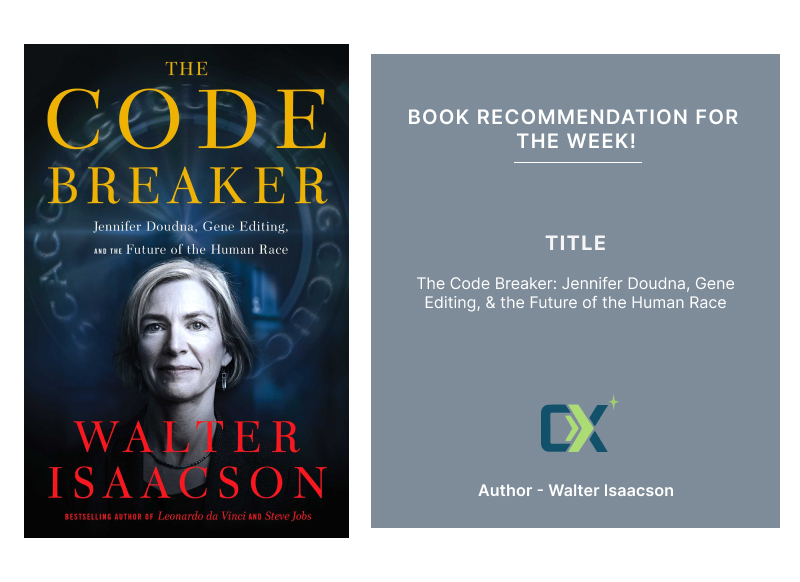
Non Fiction: The Code Breaker
by Prithvi N Shahdeoon 12 January, 2022Title: The Code Breaker: Jennifer Doudna, Gene Editing, and the Future of the Human Race Author: Wa...
Leave a Reply