Every startup reaches a point where building the product is no longer enough.
Customers are showing interest. The product is evolving. Revenue is beginning to take shape. Every week brings new priorities, fresh challenges, and decisions that can significantly influence what comes next.
Sooner or later, one question rises to the top.
Who should be the next person to join?
At first glance, it sounds like a simple hiring decision.
In reality, it is one of the most important decisions an early-stage company will make.
Most hiring advice is written for companies that already have stable teams, defined roles, established processes, and predictable growth. It focuses on scaling departments, building leadership layers, and improving efficiency.
Early-stage hiring follows a different set of rules.
The first ten hires are not stepping into a well-defined organization. They are helping create it.
They are joining a company that is still discovering what works, changing direction when needed, and learning faster than it grows.
That is what makes these hiring decisions so important.
The people you bring in during the earliest days do far more than fill open positions. They shape how problems are approached, how decisions are made, how customers are served, and how the company responds when the unexpected happens.
The Earliest Employees Are Betting on a Story
When someone joins a company with thousands of employees, they are evaluating compensation, career progression, benefits, and job security.
When someone joins a company with five employees, they are evaluating something else entirely.
They are asking themselves:
“Do I believe these people can build something worth spending the next few years of my life on?”
The decision is far more emotional than many founders realize.
Early hiring is rarely about convincing someone that the opportunity is safe.
It is about convincing them that the journey will be meaningful.
This is why founders who spend an hour explaining the problem often outperform founders who spend an hour discussing salaries.
People remember conviction.
They remember energy.
They remember whether the founder genuinely understands the problem they’re trying to solve.
The product may evolve.
The roadmap will almost certainly change.
But genuine conviction is surprisingly easy to recognize.
Skills Matter. Adaptability Matters More
Many startups unintentionally hire for today’s work.
The challenge is that today’s work often disappears within a few months.
An engineer hired to build one feature may suddenly find themselves redesigning the architecture because customer feedback changed everything.
A marketer may spend weeks creating campaigns, only to discover that the target audience has shifted completely.
A product manager may wake up on Monday with an entirely different priority than they had on Friday.
This isn’t poor planning.
It is simply what building something new looks like.
That is why adaptability becomes one of the most valuable hiring traits in an early-stage company.
The strongest early employees don’t become frustrated every time priorities change.
They become curious.
They enjoy solving new problems because they expected the journey to look exactly like this.
Hiring Specialists Too Early Can Slow You Down
There is a natural temptation to hire experts for every function.
A pricing expert.
A growth expert.
A DevOps expert.
A partnerships expert.
Experience certainly matters.
But there is another question worth asking.
“Can this person succeed when half the systems they expect don’t exist yet?”
Large companies provide processes, support teams, documentation, and established workflows.
Startups often provide a shared document, a fast-moving Slack channel, and a founder who is solving three unrelated problems before lunch.
Some specialists thrive in this environment.
Others become frustrated because they spend more time building the foundation than doing the work they were hired for.
Generalists often create more momentum during the earliest stages because they naturally move between problems without waiting for perfect conditions.
Later, specialists become essential.
Early on, versatility often creates greater leverage.
Hiring for Certainty Can Create Fragile Teams
Founders often try to remove uncertainty before making a hire.
They want the roadmap finalized.
Funding secured.
Processes documented.
Customer segments validated.
Ironically, waiting for certainty often means hiring too late.
The earliest teams become stronger not because uncertainty disappears, but because they learn how to operate inside it.
This creates an interesting hiring question.
Instead of asking,
“Can this person perform this role?”
Try asking,
“How do they react when the role changes?”
That answer tells you far more about their long-term impact.
Interviews Rarely Reveal What Really Matters
Traditional interviews reward polished communication.
Early startups rarely reward polished communication.
They reward learning speed.
One useful exercise is surprisingly simple.
Present candidates with a real problem your company is currently facing.
Not a puzzle.
Not a coding trick.
A genuine business challenge.
Then explore how they think through it.
The goal isn’t finding the perfect answer.
It is observing how they gather information, challenge assumptions, ask questions, and build a path forward.
Many exceptional startup employees don’t immediately arrive at brilliant answers.
They simply ask better questions than everyone else.
Every Early Hire Shapes Company Culture
Culture isn’t created after the company grows.
It begins with conversations happening around a small table.
The first employees decide what “good work” looks like.
They decide whether people openly disagree.
They decide whether mistakes are discussed or hidden.
They decide whether customers are treated as transactions or long-term relationships.
These habits spread surprisingly fast.
Founders often believe they are hiring individuals.
In reality, they are hiring future examples.
Every new employee silently teaches the next employee what behavior is accepted.
That influence compounds faster than any handbook.
Great Early Employees Often Outgrow Their Original Role
Many founders write highly detailed job descriptions for positions that won’t exist six months later.
The first designer may later lead product strategy.
The first engineer may eventually manage infrastructure.
The first operations hire may become the person shaping customer success.
Career paths inside startups rarely follow straight lines.
The strongest early employees don’t become attached to their titles.
They become attached to solving increasingly important problems.
When hiring, it helps to imagine not only who someone can be today, but who they could become if the company succeeds.
That mindset changes how interviews are conducted.
It changes the opportunities founders create.
And it changes retention.
People stay longer when they feel they are growing alongside the company instead of simply working inside it.
Trust Is the Fastest Hiring Accelerator
Many founders believe candidates are evaluating the business.
Candidates are also evaluating the founder.
Can they trust what they’re hearing?
Does the founder acknowledge challenges without becoming pessimistic?
Do they answer difficult questions directly?
Can they explain why the company exists beyond revenue targets?
Trust shortens hiring cycles.
It increases referrals.
It improves retention.
And unlike compensation, it cannot be copied by competitors.
Building a Team That Lasts
The earliest days of a startup are rarely predictable.
Plans change.
Markets shift.
Customers surprise you.
Funding timelines stretch.
Competitors appear from nowhere.
Through all of this, one thing remains remarkably consistent.
The companies that endure usually aren’t the ones that made the fewest mistakes.
They are the ones that built teams capable of learning faster than the environment around them changed.
That kind of team isn’t assembled by accident.
It comes from hiring people who are energized by solving unfinished problems, who care more about progress than perfection, and who see change as part of the adventure rather than a disruption.
In the beginning, products will evolve.
Strategies will evolve.
Even founders will evolve.
The people who choose to build alongside you should be able to evolve too.
Because in the earliest days, the greatest competitive advantage isn’t having all the answers.
It’s building a team that keeps finding better ones together.
Here’s a snapshot of what we’re all about:
- Hiring for AI or moving into AI roles? Write to AI.Hiring@Careerxperts.com
- Hiring? We’re here to Help!
- CareerXperts Workforce Solutions: CX Workforce
- Candidate Jobs Portal: High impact job opportunities
- Customer Stories: Hear from our clients and candidates
- Stay in the Loop: Top startup opportunities, straight to your WhatsApp. Join the channel.
- Fill out this form if you are looking to get your Career Health Diagnosed
Related Blogs
Curiosity as Career Insurance
by Sanjana R Pujaron 27 July, 2026Most career advice follows a familiar pattern: earn the right degree, join a respected company, buil...
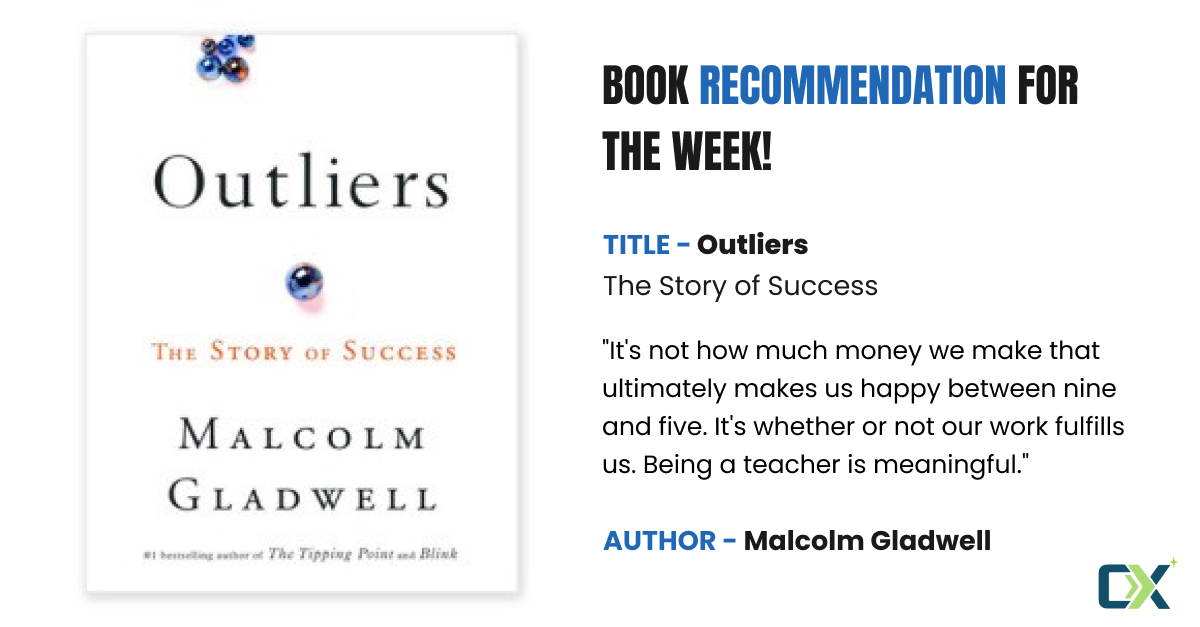
Non fiction – Outliers: The Story of Success
by Prithvi N Shahdeoon 29 December, 2021Author: Malcolm Gladwell Theme: Non-Fiction Publisher: Little, Brown and Company Published: 18th ...

The Need for Building a Career Strategy
by CareerXperts Teamon 16 August, 2023A Career strategy provides you with a roadmap, guiding your decisions and actions to ensure they ali...
Leave a Reply